Honor
November 11, 2009
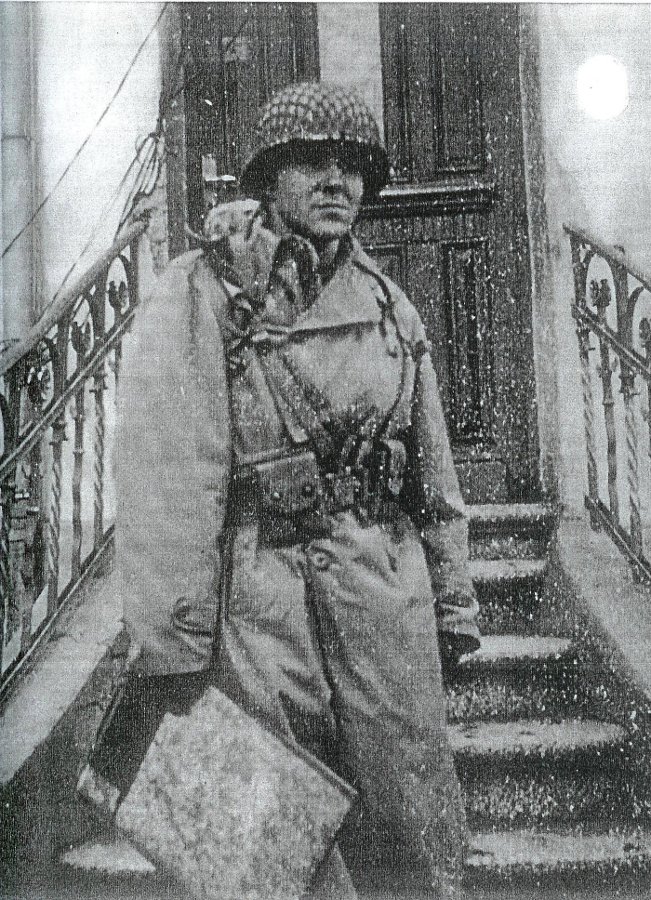 It was January 13, 1945, in the Ardennes forests of Belgium. Twenty nine days earlier, German forces under Field Marshall Von Rundstedt had launched a full-scale attack aimed at Antwerp, the principal supply port of the Allied forces, beginning a last-ditch effort by Nazi Germany to avoid losing the war.
The various confrontations resulting from this attack were labeled the “Battle of the Bulge” by American journalists during a Christmas press briefing when they saw the giant salient—or bulge—the Germans had created in the Allied lines. Much has been written about the fierce battles for Japanese-held islands in the Pacific, and the incredible sea-to-land invasions of Sicily and Normandy, but the fact is the Battle of the Bulge was the bloodiest battle for American forces in World War II. There were 89,500 American casualties, including 19,000 killed and 23,000 missing.
The Germans counted on surprise and Hitler’s belief that the Americans wouldn’t fight. He was wrong. Almost everywhere the Germans went they were held up and sometimes stopped cold by outnumbered American forces, the most famous example being the defenders of Bastogne where General McAuliffe, when asked to surrender, gave the Germans his famous one-word reply, “NUTS!” (Which the Germans had a hell of a time interpreting.)
After a week of futility, the Germans finally gave up the notion of taking Bastogne.
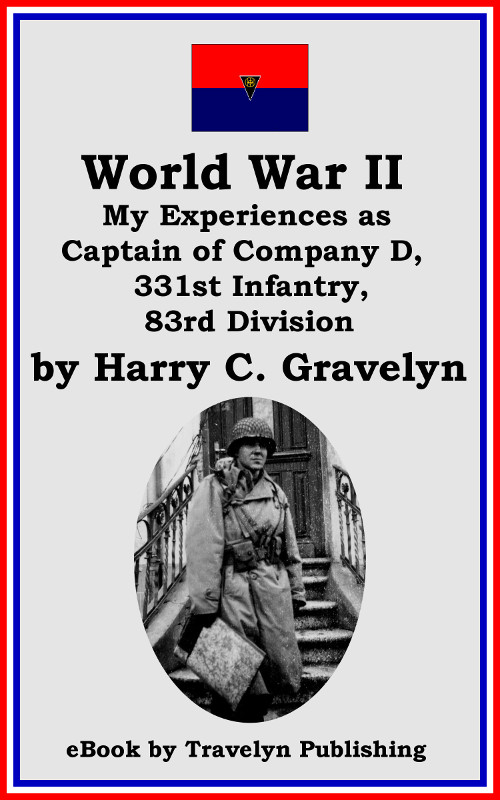
Just south of the Belgian town of Petite Langlir that day was a cold and slightly depressed 25-year-old American captain in the 83rd Infantry Division named Harry. Young to be a captain—having just recently earned his rank through performance in Normandy—and also young looking, fellow captains good-naturedly called him “Baby Boy.”
He was cold because the winter of 1945 was a vicious winter, one of the coldest in memory, and everybody was cold. It was so cold that oil would congeal in engines if they weren’t kept running and even rifles had to be maintained rigorously or they would freeze into uselessness.
The cold was an equal opportunity source of misery. Before daybreak, Harry and a German-speaking man named Hans Treutel had scouted close enough to enemy lines to hear shovels hitting frozen ground and men speaking. After creeping away, Harry asked Hans what the Germans were saying.
“Same thing American soldiers are saying,” replied Hans. “They’re griping about the cold, the snow, and having to dig another hole.”
A couple of days earlier, Harry and his company had found some rare warmth in a small village to the south. Sleeping shoulder to shoulder in one of the houses, they were awakened in the middle of the night by knocking at the door. Standing outside was an entire family, including small children, shivering in the snow. They were the owners of the house, desperate to get out of the cold. Harry’s first thought was to tell them no, get lost—soldiers at war commandeer what they need and the Belgian villagers knew this—but when he saw the small children he ordered his men to find space for them somewhere. Scenes like that played out every day. One night, standing beside a road in a horizontal blizzard, feeling cold and miserable and sorry for himself, he watched as two ghostly figures appeared out of the snow, walking down the road. It was an old man and a tiny boy. The old man was pushing a wheelbarrow while the boy, arm stretching upward, held on to one of the handles. They passed without a word and Harry was struck by the “lousiness” of a war that treated old men and little boys so harshly.
Thoughts like these, of the waste and devastation of war, and thoughts of his own wife and baby son back home in Michigan, were part of the reason for Harry’s lingering depression.
The other part of the reason was something that happened the day before, in the village of Bihain. Harry and his driver, Jimmy Lynch, along with Sergeant Hughes, were reconnoitering forward of the company and took shelter in a roofless store during a firefight. That’s when an artillery shell came through the opening above, killing Sergeant Hughes and severely wounding Jimmy.
Harry was blown clear out of the building and after his senses returned he found himself flat on his back but miraculaously unhurt. Soldiers at the front get superstitious when they experience repeated good luck of that sort and he admits that he sometimes wondered how long his luck would last.
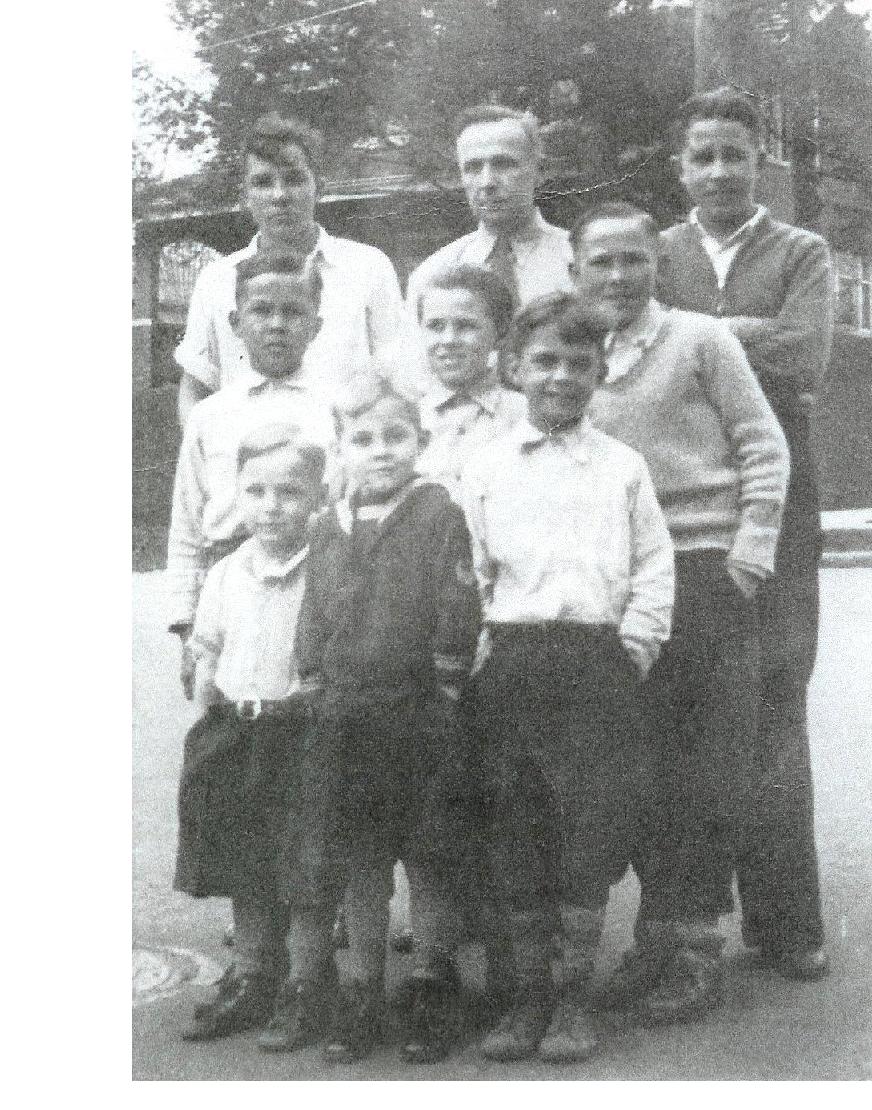 Not much longer, as it turned out.
Harry thought of Jimmy as a kid brother and, by golly, Harry’s instincts were well-honed when it came to kid brothers—he was the oldest of nine boys. Five of his kid brothers were in the military, one of them was already dead, and if he couldn’t be there to protect them, he could damn well protect Jimmy Lynch lying on the ground bleeding right there in front of him.
The Germans in Bihain were fighting fiercely and retaking the village they’d just lost. American soldiers were already falling back when the artillery shell hit, and Harry realized that he and the wounded Jimmy were now dangerously close to being overrun by the enemy.
So he stepped into the street, drew his pistol, and threatened to shoot the next soldier who left his position. They weren’t his men but they listened and stayed put. The German advance was stopped. An officer with a pistol isn't much of an obstacle to soldiers with rifles but maybe Harry reminded them of something. Or maybe they just figured anybody who could get blown out of a building and still be that ornery was somebody to reckon with.
That was the first of three times he would pull his pistol and threaten fellow Americans in the next 24 hours.
Sergeant Hughes and Jimmy were both original members of Harry’s company, men he had trained with and shipped across the Atlantic with and come to view as friends, and it hit him hard when he left Jimmy at the aid station because he thought Jimmy was as dead as Hughes.
Walking back to his company, he was met by another sergeant who informed him that two Germans wearing parts of American uniforms had been captured. Harry ordered them shot, in compliance with orders from Supreme Command, but was informed that nobody would do it so he walked over to do it himself.
“How can I order others to do something I wouldn’t do myself?” he asked himself, but when he saw that the Germans were just boys, one about 14 and the other about 17, he couldn’t do it either.
Honor is a strange thing, a fundamentally male concept, neither about morality nor about legality. It can be about responsibility, but not completely. It can be about pride, but not completely.
Honor is nearly impossible to define. You just know it when you see it.
Sophisticates of the modern world look down upon honor, contrasting cultures of honor with cultures of law as though the two are incompatible, forgetting that their sophisticated legal systems are useless when the participants have no honor.
When Harry pulled a gun on fellow Americans in Bihain and refused to obey Supreme Command orders to kill captured Germans wearing American uniforms, he was navigating through the terrain of honor with the inevitable sense of direction that seems the particular virtue of soldiers of the United States of America.
That night the Americans and the Germans battled for Langlir and Petite Langlir, and twice Harry would pull his gun and threaten a truck driver to make him deliver needed supplies to his men. In the end he would be hit and nearly killed by mortar fire as he guided that truck into Petite Langlir, but would get back on his feet and finish guiding the supplies to where they were needed before collapsing from loss of blood.
Every time I hear about the exploits of Medal of Honor winners, I think to myself that Harry guiding those supplies into Petite Langlir on January 13, 1945, ranks right up there with all of them... but then I’m kind of prejudiced because he’s my father.
Happy Veterans Day, Dad. I wish I could express better how I feel about you but it’s late and I need to catch a plane to Michigan early in the morning. All I know is this: your life is my definition of honor.
See you in a few hours.
From Reno, Nevada, USA
April 18, 2014 - Each year in January we organise a march for the 83rd in Bihain-Ottré-Petit Langlir. Next year it will be 70 years ago that the 83rd took control over the area. So on Jan 10 2015 we expect several reenactor groups with Sherman tanks to relive the Battle of Bihain. Several veterans already told us if their health stays well they would like to attend the celebrations. I don't know how your dad is doing but if he is ok he and his family are more than welcom to join us. Best to our heroes of the 83rd. - Wilfried De Backer, Belgium
December 29, 2012 - We lost a family member on the hights of Ottré - Petit Langlir on Jan 11 1945. His name was Sgt Raymond Kirkpatrick and was my opinion part of the Massacre of Ottré. If your family knows more about this event you can always email me. I live in Belgium about 2 houres from Langlir. Thank your father for our freedom. - Wilfried De Backer, Belgium
August 15, 2012 - Read ur post about 331/83/1st/Dco. My dad was also C.O. Maybe took over after Bulge or Harry's X.O. Was in same battle. Went all the way to V.E. Day. - Bob W., Texas
August 13, 2011 - That story about your father was beautiful - it made me almost cry - too bad we dont make heroes like this any more. Oh and no you're not biased, I think he deserves the medal of honor as well. - Devin, Idaho
December 25, 2010 - What a fantastic story of courage and honor. I never tire of reading the stories of these amazing people and I wonder; could I have done that? Tell your dad thanks for making the life we know possible for all of us. We owe him so much! - Jeff, Texas
April 27, 2010 - My father, Pvt. Robert W. Wilson was with the 83rd Division, 329th Reg, F Company. He was a replacment and fought in the Langlir and Petite Langlir area. He was KIA on Jan 13, 1945. My oldest son and I visited his grave in Belgium and I was surprized to find that the people of Belgium still remember the GI's as heroes. As indeed all of them were just that! I belong to the 83rd Infantry Divison Association and read your comments there. Tell your Dad thanks from all of us!! - R. Wilson, Oregon
January 3, 2010 - How did I miss this one? Grandpa just told me the story about the boy and the old man out in the cold. He mentioned that they weren't wearing any warm clothing. Grandpa has the most amazing life story. He's a great man. - Samantha, Michigan
November 12, 2009 - I usually read your articles then shake my head at the whole thing and swear I will never read another one. But since I am bound by family values to support you I continue to shake my head and read on. I chose to finally make a comment on this one because it shows that beneath that layer of conservative crap is heart. Can't wait to see you guys. - T and Roni, Detroit
November 11, 2009 - Your piece about your Dad is extraordinary. It captures so well the essence of his experience including the physical and moral struggle. And it conveys so well the love and respect you have for him. We have been so blessed to have fathers whose lives continue to offer us high example and readings for our moral compasses. Please give my best to him and your mom when you see them. - Rob, San Francisco
J.P. replies: Well, that would certainly be a thrill—I’m sure Dad would love it—but, frankly, I don’t know if he could make the trip at his age. I’ll let him know what’s happening though, and who knows? Maybe some rich Hollywood movie star making a World War II movie will give Dad a ride to Belgium in a private jet! (It could happen. You listening, Brad?)
December 29, 2012 - We lost a family member on the hights of Ottré - Petit Langlir on Jan 11 1945. His name was Sgt Raymond Kirkpatrick and was my opinion part of the Massacre of Ottré. If your family knows more about this event you can always email me. I live in Belgium about 2 houres from Langlir. Thank your father for our freedom. - Wilfried De Backer, Belgium
J.P. replies: I was slow to post your comment because my parents have been suffering though this season’s influenza outbreak. Dad didn’t know your family member but he loves hearing from relatives like yourself and he was intrigued by your mention of the Massacre of Ottré. He never heard of it. I tried to find information on the Internet but couldn’t find much. If you have sources we can look at, please let me know.
August 15, 2012 - Read ur post about 331/83/1st/Dco. My dad was also C.O. Maybe took over after Bulge or Harry's X.O. Was in same battle. Went all the way to V.E. Day. - Bob W., Texas
J.P. replies: Dad remembered your father immediately, Bob, and was thrilled that you wrote. I tried to get him to attend the 83rd reunion two weeks ago but he doesn’t feel he should leave my mother right now. Your father took over when my father was wounded. At the aid station he looked up into your father’s face and said, “You take over the company.” He heard later there were some hard feelings about that because another 1st Lt. had been with the company just as long, but Dad figured your father had more field experience. Officers with frontline field experience are priceless commodities.
August 13, 2011 - That story about your father was beautiful - it made me almost cry - too bad we dont make heroes like this any more. Oh and no you're not biased, I think he deserves the medal of honor as well. - Devin, Idaho
December 25, 2010 - What a fantastic story of courage and honor. I never tire of reading the stories of these amazing people and I wonder; could I have done that? Tell your dad thanks for making the life we know possible for all of us. We owe him so much! - Jeff, Texas
April 27, 2010 - My father, Pvt. Robert W. Wilson was with the 83rd Division, 329th Reg, F Company. He was a replacment and fought in the Langlir and Petite Langlir area. He was KIA on Jan 13, 1945. My oldest son and I visited his grave in Belgium and I was surprized to find that the people of Belgium still remember the GI's as heroes. As indeed all of them were just that! I belong to the 83rd Infantry Divison Association and read your comments there. Tell your Dad thanks from all of us!! - R. Wilson, Oregon
January 3, 2010 - How did I miss this one? Grandpa just told me the story about the boy and the old man out in the cold. He mentioned that they weren't wearing any warm clothing. Grandpa has the most amazing life story. He's a great man. - Samantha, Michigan
November 12, 2009 - I usually read your articles then shake my head at the whole thing and swear I will never read another one. But since I am bound by family values to support you I continue to shake my head and read on. I chose to finally make a comment on this one because it shows that beneath that layer of conservative crap is heart. Can't wait to see you guys. - T and Roni, Detroit
J.P. replies: See, that’s how we lure people in and turn them into conservatives. First we suck you into an emotional trap, then we hit you with the conservative philosophy while you’re vulnerable—next thing you know you have a lighted portrait of Ronald Reagan on your living room wall.
November 11, 2009 - Your piece about your Dad is extraordinary. It captures so well the essence of his experience including the physical and moral struggle. And it conveys so well the love and respect you have for him. We have been so blessed to have fathers whose lives continue to offer us high example and readings for our moral compasses. Please give my best to him and your mom when you see them. - Rob, San Francisco
J.P. replies: [Rob is my cousin.] Rob, I will never forget Jay’s wedding, when your mother was alive, and the band leader did a married couples dance where he would tell people to sit down if they were “married less than” so many years. He kept increasing the number five at a time, getting higher and higher, and your parents, my parents, and Uncle Tom & Aunt Barb just kept dancing. The song eventually ended and they had to start another song. He finally stopped the band and asked the dancers if they understood the doggone rules! He said he’d never had anybody dance that long before and here he had three couples still going. When he learned that the three couples included three siblings and that Uncle Bob was also in attendance, he was amazed. We’re pretty damn lucky that we come from such long-lived stock, eh?